TELANGANA: IS THERE REAL DISCRIMINATION?
- Nalamotu Chakravarthy.
IRRIGATIONNow, let’s move on to the most controversial irrigation issue. You will see allegation after allegation by the separatists on how the other regions are misappropriating the projects while denying Nizam Telangana its rightful access to its own waters. I will address some of those issues in a bit, but let’s first look at the macro numbers and how the irrigation sector performed since the state’s formation.

Table 4 provides the gross area irrigated by region. Clearly, since the formation of the integrated state of Andhra Pradesh, the irrigation sector has developed the most in the Nizam Telangana region. While the Telangana region experienced a net growth of 191% ever since the state formation, Kosta and Rayalaseema experienced a relatively modest growth of 57% and 44%. Again, percentages can sometimes be misleading. Therefore, let’s look at the net incremental area brought under irrigation. Since the formation of the state, in Kosta, about 10.7 lakh additional hectares of land has been brought under irrigation, whereas in Telangana, 15.8 lakh hectares of new area came under irrigation.
The question that might cross one’s mind when looking at the irrigation data is whether the improvements in irrigated area translate into increased output in agriculture, which is money in the farmer’s pocket
In a study done by Andhra Pradesh Agricultural University, the Kosta region recorded 107% growth in agriculture production between 1956 and 1991, whereas the Nizam Telangana region recorded a 244% growth. Even in terms of additional tonnage since the state formation, Telangana leads Kosta. Table 5 provides these details.

One could argue that the net tonnage produced in Telangana is lower than that of Kosta. Although that is true, what we are trying to determine is whether the Telangana region suffered after the integrated state was formed. Growth in output of 244% makes it amply clear that Telangana grew at a far more rapid pace than the other regions since the state formation.
The devil is often in the details and the story of irrigation sector growth is incomplete without looking at the modes of irrigation, and they are canal irrigation, tank irrigation, tube well, and traditional well irrigation.
CANAL IRRIGATION:This is one of the most controversial areas concerning regional differences existing today. Table 6 details how each region performed in this segment.

In his inflammatory paper, Professor Jayashankar references the canal irrigation numbers of 2001 showing the Telangana region as having a mere three lakh hectares under canal irrigation when Kosta has a whopping twelve lakh acres. The wily professor ‘selects’ 2001 data to trump up his hate-Andhra agenda. However, he conveniently forgets to mention the fact that the Kosta region had eleven lakh hectares under canal irrigation for more than 100 years before the integrated state of Andhra Pradesh was formed.
Let us now look at some unadulterated facts. The Nizam Telangana region experienced most growth of 144% in canal irrigation since the formation of the state. Even in terms of additional area brought under canal irrigation, nearly 1.6 lakh hectares of additional land was brought under canal irrigation in Nizam Telangana since the state formation, which is about equal to the combined total of Kosta and Rayalaseema. Lastly, Nizam Telangana does have a much smaller area under canal irrigation but that has more to do with geography than discrimination.
TANK IRRIGATION:
Before the mega irrigation projects, such as the Nagarjuna Sagar Dam, the Krishna-Godavari barrages, and the Sriramsagar project – arrived, tanks were a major water source for irrigation. Many tanks in our state, except for those near the twin cities, were developed during the Kakatiya and Vijayanagara rules. Particularly, the Kakatiya rulers gifted the Nizam Telangana region with an extensive network of tanks for irrigation purposes. There are at least 38 tanks of significance documented in the inscriptions from the Kakatiya period. By visiting Warangal and the surrounding areas, one can see the amazing tanks, such as the Ramappa and Pakala, built by the Kakatiyas nearly 800 years ago which continue to serve the public to this day.
So, what is the situation of tanks in the state today? It is abysmal!

Looking at Table7, one thing becomes clear – the Telangana region suffered immensely because of the neglect of tank maintenance. However, one cannot lose sight of the fact that the Rayalaseema region suffered an even steeper decline of a –79%, compared to Telangana’s –49% decline.
Tank irrigation is an excellent mode of irrigation. It is a low technology, low investment, low maintenance, environmentally friendly method of irrigation, and our people have effectively used it for many centuries. Failure of tanks is simply a failure on the government’s part. In the past, the local communities effectively administered tanks. Once the government intervened, the system failed miserably.
If Telangana’s separatist leaders are sincere about helping farmers, they should focus their efforts on developing tank irrigation in the region. Even if tank irrigation is restored to 1956 levels, we are looking at being able to provide water to nearly two lakh hectares of additional land.
TUBE WELLS AND OTHER WELLSThere has been spectacular growth in these two segments – in both the Nizam Telangana and the Rayalaseema regions. Because of lack of access to canal or tank water, farmers were forced to look into alternate sources of water. Bore-well drilling technology offered farmers the relief they were seeking.


Table 8 and Table 9 provide the details of growth in the tube well and other well categories.
Based on the macro irrigation data provided thus far, clearly, Nizam Telangana made significant strides in the agriculture sector. Saying that, one cannot deny that the Telangana region is agriculturally behind when compared to the Kosta region. Clearly, more work must be done to improve the agriculture sector in the Nizam Telangana districts. However, to claim discrimination as the reason for under-development is wrong. The irrigation sector in the Rayalaseema region, from where half of all our state’s CMs came from, is in a far worse situation than the Telangana region.
Now, let’s quickly get into some specific controversies surrounding the use of water resources in the state.
Andhra Pradesh is a blessed state with many natural resources – the primary one being the rivers. Of the three largest rivers in [South] India, two – the Krishna and the Godavari – flow through Andhra Pradesh. These two rivers and their tributaries meander through other states, enter Andhra Pradesh in the Nizam Telangana region, and pass through Kosta before merging into the Bay of Bengal.
Given India’s heavy reliance on agro-economy, water becomes a crucial resource. As one can expect, every state lays its claim on the river waters. Naturally, this leads to disputes among the states regarding each state’s rightful share of the river waters. In the 1960s, similar disputes arose among states for both the Krishna and Godavari River waters.
In 1969, the central government appointed a tribunal under the [chair of] Supreme Court Justice Bachawat to resolve the Krishna River water allocation dispute among the states of Maharashtra, Karnataka, and Andhra Pradesh. The Bachawat Tribunal studied river water allocation methods, both nationally and internationally. The commission particularly studied the American model as well as the international models. In the end, Bachawat relied on international law in developing a framework for resolving the river water dispute. This is how Bachawat summarized his core view: “In determining what is equitable utilization where existing and contemplated uses are in conflict, while other factors must be considered and weighed, the most important single factor is the preferred position of the existing use; thus, an existing use which is beneficial and not wasteful will ordinarily prevail over a contemplated use.”
In other words, Bachawat determined that the existing projects on the Krishna River should be given preference over the planned projects.
Bachawat then attempted to determine the quantity of available water in the River Krishna. After reviewing the data available from 1894 to 1969, the tribunal determined, based on 75% dependability, that the river has 2,060 TMC (thousand million cubic feet) of water. After four years of further study, Bachawat awarded 560 TMC of Krishna River water to Maharashtra, 700 TMC to Karnataka, and 800 TMC to Andhra Pradesh.
Maharashtra, Karnataka, and Andhra Pradesh have 26.81%, 43.74%, and 29.45% of the Krishna River catchment areas in their states. Maharashtra and Karnataka protested that the tribunal’s award was unfairly beneficial to Andhra Pradesh despite it having a smaller share of the catchment area and requested reconsideration.
Bachawat, while admitting that Andhra Pradesh received a larger share of the river water when compared to its catchment area, ruled against Maharashtra’s and Karnataka’s claims. He relied on the “protection of existing uses” principle in his ruling. This principle guaranteed water to existing projects such as the Nagarjun Sagar and Krishna Delta system.
Of the 800 TMC given to our state, Bachawat went ahead and recommended how much of the Krishna River water each project in Andhra Pradesh should get, details of which are provided in Table 10.
BACHAWAT TRIBUNAL KRISHNA RIVER WATERS AWARD: TABLE 10

According to the Bachawat award, Kosta gets 366 TMC, Rayalaseema 122 TMC, and Nizam Telangana gets 260 TMC of water from the River Krishna. Readers might have noticed that the water allocation does not add up to 800 TMC – the remaining water is retained as a provision for evaporation.
After settling the Krishna River dispute, the central government asked Bachawat to offer a similar solution to the Godavari River dispute among Maharashtra, Madhya Pradesh, and Andhra Pradesh. After another extensive study, the Bachawat Tribunal, in its final award in 1980, allocated 1,472.7 TMC of Godavari River water to Andhra Pradesh. Out of the 1,472 TMC available to our state, today, we are only using 514 TMC, and the rest flows into the ocean.
Interestingly, the Godavari River receives nearly 600 TMC of water almost at the tail end of the river. Even if Nizam Telangana manages to tap the Godavari River fully at higher altitudes of its region, it will not affect the Kosta farmer significantly.
With that primer on the Krishna and Godavari Rivers, let’s quickly jump into some of the claims made by the Telangana state proponents.
Professor Jayashankar writes in his paper: “Bachawat Tribunal allocated 811 TMC ft. of water to Andhra Pradesh. The allocation of water among different regions of the state, however, has been the prerogative of the state government. If catchment area is taken as the principal criterion for allocation of waters between different regions of the state, as is normally done between different states of the country, Telangana should get 68.5% of the 811 TMC ft. If cultivable area, rainfall, subsoil levels of water, backwardness, etc., also are taken into account Telangana region would be entitled to not less than 70% of the total quantum of water allocated to the state.”
Professor Jayashankar does not provide sources for his claims. Here are some real facts.
I took advantage of the recently passed Right to Information Act and formally requested the A.P. State Irrigation Department to provide data for Nagarjuna Sagar Dam water utilization for the last 10 years. Table 11 shows the annual outflows from the right and left canals of the Nagarjuna Sagar Dam.

Let me remind readers that the right canal water was awarded exclusively to the Kosta region, whereas 75% of the left canal water was allocated to the Nizam Telangana districts and the remaining 25% to the Kosta districts.
Not surprisingly, the numbers once again disprove Jayashankar’s claim that the Telangana region only gets 25% of the water. The left canal water is mostly used in the Telangana region, and the West Godavari district, which is at the tail end of the canal, rarely gets its share of water from the left canal.
The surplus water from Nagarjuna Sagar flows down to the Krishna Barrage. During drought years 2000-2005, the Kosta region did not get any Krishna River water from the Nizam Telangana area.
Not every claim made by the proponents of Telangana is false. For example, concerns about Rajolibanda water allocated to Telangana being misappropriated are valid. Worries about projects such as Singur being diverted to city’s drinking water purposes instead of irrigation is an important issue to consider. Concerns regarding sky-high investments being made into the Polavaram Project with questionable returns are worth serious consideration. Our leaders must sort out these issues through a democratic process, and demanding separation is not the solution.
If the separatist leaders are serious about helping the farmers of Nizam Telangana, they should:
1) Fight for effective use of the entire 366 TMC of Krishna water allocated to the Nizam Telangana region. Just eliminating seepage in the canals and removing silt from the reservoirs could dramatically improve canal water utility.
2) Similarly, productively use every drop of Godavari water awarded to the region.
3) Develop tank irrigation and at least restore it to a state where it was a few hundred years ago.
4) Fight against neighboring states illegally tapping water.
These simple non-controversial initiatives would dramatically improve the agriculture sector in Nizam Telangana and are relatively easy to accomplish. Instead, our separatist leaders obsess over neighboring Kosta region’s prosperity and neglect to look into ways to develop our own districts.
* * * * *
(to be continued)
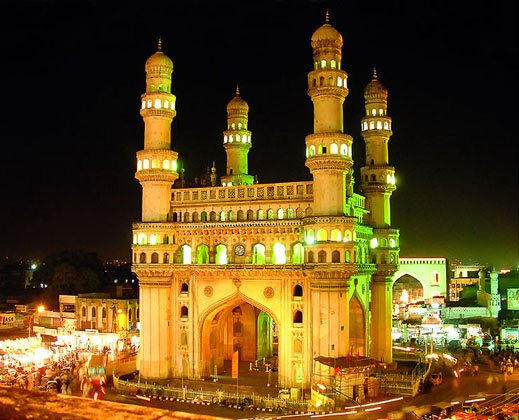 Learning of the attack on the Velama kingdom, Sri Krishna Deva Raya rushed with his forces to rescue and camped at Panagal in Nalgonda. In a fierce battle that ensued, Sultan Quli defeated Sri Krishna Deva Raya forcing his retreat from Nalgonda. Encouraged by his victory, Sultan Quli marched on Coastal Telugu districts. Sri Krishnadeva Raya learnt his lesson and moved into Coastal Andhra with a massive army and succeeded in driving out Sultan Quli’s forces. As a result, today’s Nizam region was separated from Telugu land and a tenuous peace reigned between Vijayanagaram and Qutub Shah who started ruling from Golkonda.
 Seven years later in 1766, the British and Nizam reached an agreement to end hostilities. In return for keeping the Coastal districts, British agreed to pay nine lakh rupees a year to Nizam. As you can see, though Coastal districts were separated from the rest of the Telugu land, the districts were still contributing to Hyderabad exchequer through the taxes paid to the British, which are in turn being passed on to Nizam.


